The Ultimate Guide to Going Solar in Saskatchewan (2026)
A Complete Guide to Solar Energy in Saskatchewan
See Solar Prices Near You
Enter your postal code to see what solar panel installations cost in your local area.
1. Introduction: Why Choose Solar in Saskatchewan?
The popularity of solar is growing in Saskatchewan. With 2,400 – 2,700 hours of sunlight every year, solar homeowners can expect a very decent power output even from a reasonably sized solar system. As Saskatchewan has very good net metering practices and allows you access to federal solar grants and incentives, this is the right time to go solar.
Guide last reviewed: September 26, 2026.
Key Takeaways
Average solar array cost for 5kW: $14,500
Solar cost per watt of installed power: $2.9
Saskatchewan solar incentives and rebates: Canada Greener Homes Grant, net metering
Average price of solar per sq.foot for a 5kW system: $9.67/sq. Foot. The average home size taken as 1,500 sq. feet
2. How Solar Energy Systems Work
Solar Power Basics Explained
Although it may seem complex, solar energy is actually very simple to grasp. As the sunlight hits your roof, it generates electricity. This electricity that comes in the DC form has to be converted to AC. This is done by your solar inverter. Then the energy is fed into your power lines, and you use it as you need be. The excess energy is fed into a solar battery or into the grid, which virtually acts as a battery itself.
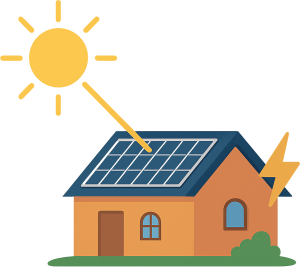
1. Sunlight hits the solar panels, producing direct current (DC) electricity.

2. An inverter transforms the DC electricity into alternating current (AC), making it usable for your home.
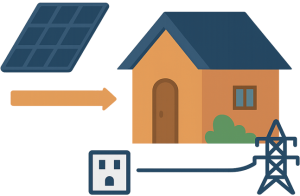
3.Your household draws on this power first, reducing the amount of electricity you need from the grid.
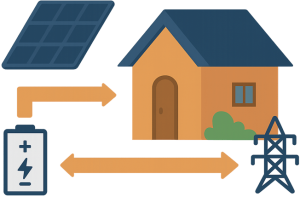
4. Any surplus energy is either sent back to the grid or stored in a solar battery for later use.
3. Saskatchewan’s Solar Energy Potential
Saskatchewan has a very high solar energy potential. In fact, the province experiences anywhere between 316 – 322 sunny days every year and roughly 2,400 – 2,700 sunny hours every year. This puts it in the sunniest provinces in Canada and a single kW of solar panels installed can yield 1,300 to 1,500 kWhs of energy every single year.
The province also has a net metering program which allows you to go full solar without buying a solar battery. In this case, the grid will act as a virtual battery. Government rebates and funding programs help you reduce solar upfront costs as well. Rising electricity prices that this province is particularly prone to are very likely to keep incentivizing more people to go solar.
Canada’s Energy Landscape
If you compare the energy profiles of Saskatchewan and Canada, you will see that Saskatchewan has a lot more to go to reach its own climate and carbon neutrality goals. For example, Canada gets almost 60% of its energy from hydro, while in Saskatchewan it is as low as 10%. Saskatchewan also produces less energy from wind, but almost 44 times more energy from natural gas than Canada. Solar, unfortunately, is still at 0.1% of total electricity production in the province, while Canada has almost 10 times as much energy coming from solar.
Fuel Type | Canada | Saskatchewan |
Hydro | 60% | 10% |
Wind | 6% | 4% |
Petroleum | 0.3% | 0.1% |
Biomass | 1.4% | 0.4% |
Natural Gas | 1% | 44% |
Solar | 1% | 0.1% |
Other* | ~30.3% | ~41.4% |
Energy Profile: Canada and Saskatchewan Comparison
* Other: Coal, Coke, and Nuclear combined
Source: CER
Understanding Solar Irradiation in Saskatchewan
Solar radiation in Saskatchewan is not uniform throughout the year. December is traditionally the least sunny month, and you can produce around 67 kWh of solar electricity during this month for every kW of solar installed. However, in April you can produce as much as 135, as this is the sunniest month in the year. It is followed by July with 131 kWh, August 129 kWh, and May and June with 128 kWh of solar electricity each.
Month | kWh/kW of installed capacity in Saskatchewan | Energy Production of a 5 kW system in kWh | Energy Production of a 10 kW system in kWh |
January | 81 | 405 | 810 |
February | 111 | 555 | 1110 |
March | 129 | 645 | 1290 |
April | 135 | 675 | 1350 |
May | 128 | 640 | 1280 |
June | 128 | 640 | 1280 |
July | 131 | 655 | 1310 |
August | 129 | 645 | 1290 |
September | 114 | 570 | 1140 |
October | 102 | 510 | 1020 |
November | 75 | 375 | 750 |
December | 67 | 335 | 670 |
Total – Annual | 1330 | 6,650 | 13,300 |
Energy Output per 1kW, 5kW and 10kW of installed solar capacity in Saskatchewan
Source: Energy Hub
Does Solar Make Sense in Saskatchewan?
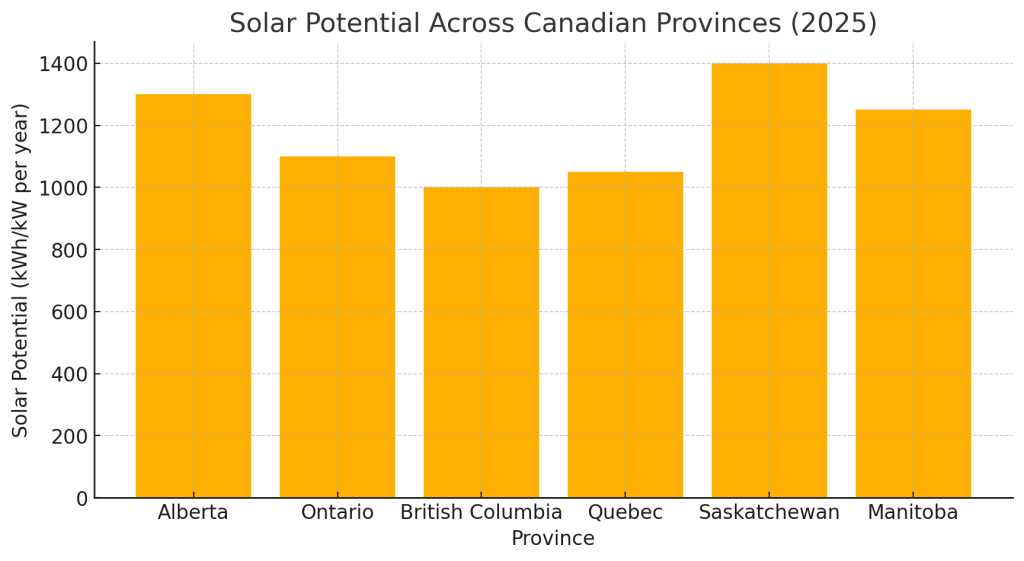
Yes, it does. Have a look at comparison of solar irradiation in different Canadian provinces:
| Province | Average Annual Sunlight Hours | Solar Potential (kWh/kW per year) |
|---|---|---|
| Alberta | 2,300 - 2,600 | 1,200 - 1,400 |
| Ontario | 1,800 - 2,200 | 1,000 - 1,200 |
| British Columbia | 1,500 - 2,000 | 900 - 1,100 |
| Quebec | 1,700 - 2,100 | 1,000 - 1,150 |
| Saskatchewan | 2,400 - 2,700 | 1,300 - 1,500 |
| Manitoba | 2,100 - 2,500 | 1,150 - 1,300 |
On the other hand, it is important to understand that the city you live in within the province is also going to have a major say in how much energy you can produce. For example, Saskatoon can produce as much as 1,350 kWh of energy for every kWh of solar capacity. Prince Albert, on the other hand, can produce as little as 1,300 kWh, while Lloydminster is at the low end with 1,278 kWh produced per year per kW of solar installed.
City | 1 kW System | 5 kW System | 10 kW System |
Saskatoon | 1,350 | 6,750 | 13,500 |
Regina | 1,361 | 6,805 | 13,610 |
Prince Albert | 1,300 | 6,500 | 13,000 |
Lloydminster | 1,278 | 6,390 | 12,780 |
Moose Jaw | 1,363 | 6,815 | 13,630 |
Estimated Energy Production in different SK cities, with a 1kW, 5kW and 10kW solar system
4. Solar Incentives and Rebates in Saskatchewan
There are multiple federal and provincial solar incentives and rebates that help reduce the upfront cost of going solar:
1. Canada Greener Homes Grant (Closed — Historical Reference)
- ❌ Closed: The Canada Greener Homes Grant stopped accepting new applications in February 2024 and is no longer available. It is listed here for historical reference only — do not apply.
2. Net Metering
- Sell excess electricity to the grid.
- Earn credits.
- Use credits when the sun isn’t shining.
- Reduce long-term electricity costs.
To get net metering in Saskatchewan, you will need to pay:
- Interconnection study – $315, non-refundable
- Electrical Permits and Inspection, quote available upon contact
- Interconnection Costs – $498.75 for a new, bi-directional meter
3. Other Green Energy and Sustainability Programs
- Residential Equipment Replacement Rebate – Energy rebates for those that are looking to increase energy efficiency of their homes by switching to energy-efficient furnaces, boilers, and water heaters.
- New Home Environment Incentive – A $500 incentive on new home appliances that are certified through ENERGY STAR, LEED, or EnerGuide.
Pro Tip: As the profile of solar rebates and incentives changes over time, please check in with your utility company and your nearest municipality office for more information.
Get Started Today
See the cost and savings you would have if installing solar on your house:
5. Cost of Installing Solar Panels in Saskatchewan
How Much Does It Cost to Install Solar Panels in Saskatchewan?
Every solar system is designed from scratch — see our full Canada-wide solar cost breakdown for national averages and comparisons. This means that each has a different price. However, there are some universal factors that can contribute to the price of solar for your home. For example, your energy needs, system size, the orientation and the slope of your roof, whether you install a solar battery, are some of the factors that come into play when determining the price of your solar system.
Average Solar Panel Installation Costs in Saskatchewan
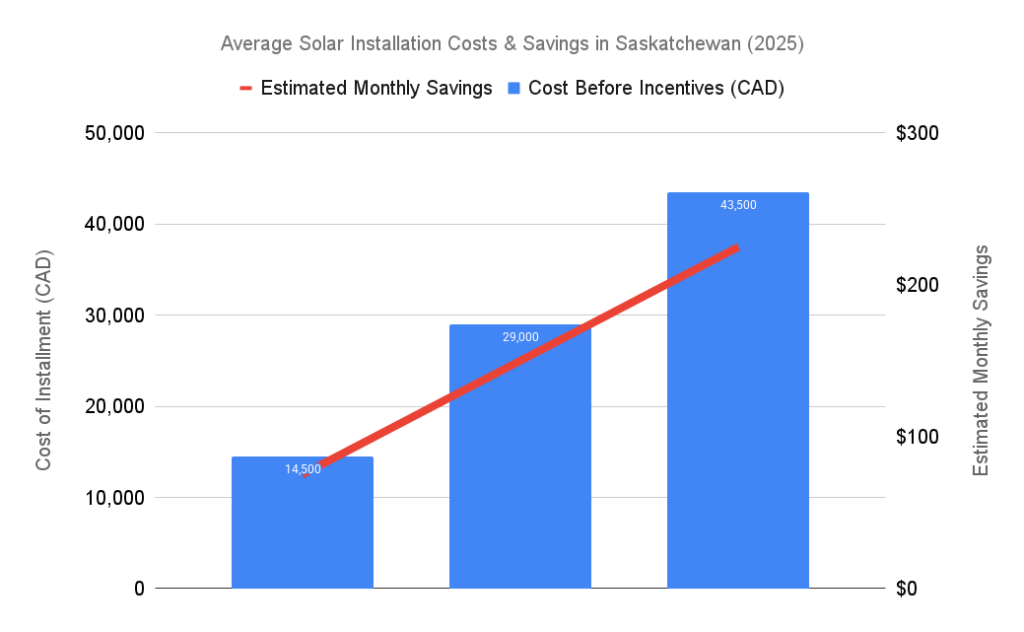
So here is a broken down version for a 5, 10 and 15kW solar panel system. Please bear in mind that most of these systems pay for themselves in 6 to 12 years.
System Size | Average Cost (Before Incentives) | Average Cost (After Incentives) | Estimated Monthly Savings | Payback Period |
5 kW | $13,000 – $16,000 | $5,500 – $8,500 | $50 – $100 | 8 – 12 years |
10 kW | $26,000 – $32,000 | $18,500 – $24,500 | $100 – $200 | 7 – 10 years |
15 kW | $39,000 – $48,000 | $31,500 – $40,500 | $150 – $300 | 7 – 10 years |
* Larger systems yield more electricity and power, but cost more and take longer to install.
Key Factors That Affect Solar Costs in Saskatchewan
There are multiple factors that influence the total upfront cost of your solar installation.
1. System Size and Household Energy Use
The system size and your energy needs are the biggest contributor to the price of solar.
The larger the solar array that you’re putting on your roof, the higher the price.
At the same time, the more energy you use in an average month or throughout the year, the bigger the solar system you will need.
2. Types and Quality of Solar Panels
- Monocrystalline solar panels are the most expensive, but also the most efficient.
- Polycrystalline solar panels are a bit less efficient, but they also come with a lower price tag.
3. Battery Storage (Optional but Recommended for Some Homes)
Unlike solar panels or solar inverters, solar batteries are not an integral part of a solar power system. So you can choose whether you want it or not. If you choose to go with a solar battery, you can expect your solar system upfront cost to increase by as much as 25%. This is the reason why most solar homeowners in Saskatchewan choose to apply for net metering instead.
4. Labour and Installation Costs
Installation costs and labor are another important factor to consider. They comprise roughly 16 – 27% of the total upfront cost. If you would like to save on these, we have to recommend not to go for the cheapest installer, as very low prices often come with a very low quality. Considering the total cost of a solar-powered system, it doesn’t make much sense to risk any malfunction or damage to the system.
5. Available Incentives and Rebates in Saskatchewan
Usually there are both provincial and federal incentives and rebates that are available to Canadian households for installing solar. However, in Saskatchewan, the last program of that kind ended in 2019. So currently you can only apply for energy efficiency rebates in Saskatchewan, but they do not include solar panels. On top of this, the federal Canada Greener Homes grant of up to $5,000 is available.
What Can Increase Solar Panel Prices in Saskatchewan?
Besides this, there are also other factors that you should consider. For example, if you have an old roof, you may need to change it or do some repairs so it will be able to support the weight of your solar system. Although solar systems are not heavy, having an old roof may compromise the integrity of both the roof and the solar system.
Solar Savings and Return on Investment (ROI)
How much you can save with solar panels depends on your energy use and the size of your solar system. In general, homeowners can offset up to 90% of their home energy bill. The remaining 10% are the fixed costs, which you have to pay for as long as you’re connected to the grid, even though your energy use may be equal to zero. Considering that Saskatchewan has very high energy prices of almost $0.20 per kWh, you can expect significant savings from day one of going solar.
6. Financing Solar Panels in Saskatchewan
The upfront cost of going solar is usually very high, so here is how to reduce it.
1. Solar Loans and Flexible Financing Options
- Many banks offer solar loans with very low interest rates and long payback periods.
- Any payments that you have to make can be offset by energy savings.
2. Using a Home Equity Line of Credit (HELOC) for Solar
- You can also use a HELOC loan to finance solar.
- This is a great option for homeowners with home equity available
7. Choosing Your Solar Equipment: Sizing, Panels, Inverters & Batteries
Solar panels are not small, so they can take up a significant amount of roofspace. However, you usually need way fewer solar panels than you may think. In fact, if you consume around 1,000 kWh of electricity in an average month, you will need a solar system that’s 9.3 kW approximately. If you want to purchase smaller solar panels with 330W solar output, you will need 28 of those. However, if you opt for larger solar panels with 580W of power output, you will need as few as 16 of them.
However, the story does not end there. Usually in the attic or in your garage, you will need to set aside some space for a solar inverter. You will need to do the same for a solar charger and solar battery if you choose to install one. But besides this and a little bit of mending in the switch box, there really isn’t much that you need to take care of
1. Choosing the Best Solar Panels for Your Home
Using the right solar panels and the solar inverter is a crucial step in establishing or designing your solar system. Let’s go and consider these in more detail now.
There are three basic types of solar panels, but mostly the first two are used in home solar setups. They are monocrystalline and polycrystalline panels. Thin-film solar panels aren’t used as much because they’re flexible, and they’re mostly intended for special uses.
Monocrystalline Panels (Best for Efficiency & Cold Climates)
Monocrystalline solar panels are made of a single silicone crystal. This gives them very high efficiency. However, they’re also the most expensive kind. They perform very well in cold climates such as Saskatchewan. They also feature efficiency rates between 18 and 22%.
Polycrystalline Panels (Budget-Friendly Option)
Polycrystalline solar panels, on the other hand, are made of many smaller pieces of silicon crystals. This reduces their efficiency, but also their price. They will still last you for more than 25 years, and they are still a fairly good solution in a cold climate such as Canada.
Solar Panels Comparison
- Monocrystalline solar panels perform better with the sun coming at a sharper angle.
- Monocrystalline solar panels also perform better in colder climates.
- Polycrystalline panels come at lower price tags and lower efficiencies.
- Polycrystalline solar panels do not mean that you will get less electricity from your system, but that you will need more solar panels for the same power output.
Panel Type | Efficiency | Cold Weather Performance | Lifespan | Watts per Square foot | Cost |
Monocrystalline | 18-22% | Excellent | 25+ years | More | Higher |
Polycrystalline | 16-18% | Decent to Good | 25+ years | Fewer | Lower |
Pro Tip: Monocrystalline solar panels are the best for Saskatchewan’s climate and the angle at which average sun rays fall.
2. Selecting the Right Solar Inverter
The way that solar technology works is that solar panels produce DC or direct current electricity. Although this is a type of electricity that powers certain gadgets, such as your phone and wireless earbuds, this current cannot be used in household appliances. It’s simply not strong enough. To make sure that your appliances do not get damaged by improper current supplied to them, you use a solar inverter.
A solar inverter is a power inverter that is connected to a solar system. What it does is that it converts DC to AC. AC stands for alternating current. This is the type of current that your household appliances can use safely. This is also the type of current that can be delivered back into the grid and that can be delivered to your solar charger and solar battery.
1. String Inverters (Most Common and Cost-Effective)
String inverters are the most common type of inverters. They’re also the most affordable. They connect to your solar system and take care of the DC energy that comes from all the solar panels at the same time. However, because of the way that this kind of a system is set up, partially-shaded panels will use electricity from your system even before that electricity reaches your inverter.
Although this is a great thing for the shelf life of the inverter, you will still be getting a lower power output. Never forget that any solar panel that is shaded acts as a consumer of the electricity produced by nearby solar panels. The only way to work around this is to go for micro inverters.
2. Microinverters (Ideal for Shaded Roofs or Multiple Angles)
Microinverters are called micro because they are very small in size. They are so small in size, actually, that they are added to each individual solar panel. The biggest difference between microinverters and string inverters is that microinverters deal with the DC and its conversion to AC at the site of the solar panel.
This means that shading is not a problem, and it also means that you will be getting a higher power output with the same number of solar panels. This is so because transferring electricity from solar panels to a string inverter demands a certain length of a wire, and DC is not very good at handling the resistance within these wires. So, with string inverters, there is a higher power loss that is managed very well by microinverters.

3. Hybrid Inverters (Designed for Battery Storage Integration)
Hybrid inverters are a special kind of string inverters that have the ability to charge your solar battery. With this type of hybrid inverter you would save money compared to a traditional system of a string inverter plus a solar charger. With a hybrid inverter you will be able to translate the DC electricity coming from the battery into AC electricity to supply your home. This mode is activated as soon as the sun has set.
Solar Inverter Comparison Guide
- String inverters are cheapest and are best used on roofs with no shade. They offer limited expandability.
- Microinverters are perfect for roofs with partial shading or multi-slope roofs. They offer high efficiency of conversion and expandability on your system when you need it.
- Hybrid inverters love full sun and are perfectly suited for systems that are to be expanded with either more solar panels or a solar battery.
Inverter breakdown by type:
Inverter Type | Best For | Efficiency | Expandability | Battery Storage | Cost |
String Inverter | Roofs with no shade | Good | Limited expandability, additional inverters are suggested with array expansion | No | Lower |
Microinverter | Roofs with partial shading, or multi-slope roofs | High | Yes | No | Higher |
Hybrid Inverter | Full sun with systems designed for future expansion | High | Yes | Yes | Higher |
Pro Tip: Microinverters are the best among all inverters, although you may also want to consider hybrid inverters if you plan to have a solar battery as well.
Solar Battery Storage Solutions
Solar batteries are expensive, so they’re usually not a part of a solar system. However, if you’d like to squeeze more value out of your solar panels, or if you simply don’t trust net metering in your area, you can go for solar batteries. However, when designing a solar system, you should be aware of your daily energy needs, and you should have solar batteries cover these. Be aware that a single 10 kWh battery will last you for roughly 8 hours out of a day, but will cost you almost $10,000.

Final Thoughts
As solar systems are complex in nature, it is best left to professionals to design the perfect system for you. However, we insist that you should understand what different types of solar panels and solar inverters there are. That way, you will be able to make informed decisions and financially responsible decisions as well.
8. Finding a Trusted Solar Installer in Saskatchewan
Choosing a good and reliable solar installer is half the job done. Here it is why it matters:
What to Look for in a Solar Installer in Saskatchewan
For the sheer reason of complexity, you should always consider finding a reliable solar installer in Saskatchewan. You should do that because a well-designed and a well-installed solar system will last you for many years to come. In fact, you can expect to get more than 25 years of green electricity with zero emissions out of an average solar panel system.
On top of this, a well-installed system will function with little to no problems and very little need for maintenance. This means that after the payoff period, you will be getting free energy for more than a decade to come.
Certification and Experience
All installers in Saskatchewan must follow provincial electrical codes and they need to obtain proper permits from the utility company and the municipality office.
Do They Specialize in Saskatchewan’s Solar Programs?
They need to be well acquainted with incentives and rebates and they should be able to help you maximize the amount of money you receive both before and after installing your solar panels.
Do They Provide Transparent Pricing and Reliable Warranties?
High quality solar installers will always provide warranties on solar panels. Solar panels receive 25-year warranties and your solar inverter 10 years.
Avoiding Scams and Low-Quality Work
By hiring a well-adjusted and reliable solar installer in Saskatchewan, you will avoid low-quality work and you will avoid scams.
How to Choose a Reputable Solar Installer
There are dozens of solar companies working in Saskatchewan, so you should consider the following before choosing the one to do your solar installation.
1. Are they Certified and Experienced?
You should look for installers that are certified by the Canadian Solar Industries Association, CanSIA, or CSA. They should have at least 3 years of experience.
2. Do They Have Strong Customer Reviews?
They should also have strong customer reviews from both Google and SolarGuide.ca. Installers with no reviews may still be good, but considering their lack of experience, they are not our recommendation.
3. Do They Offer Transparent Pricing and Warranties?
A good and reliable solar installer should provide a detailed quote. The quote should contain no hidden fees.
4. Do They Specialize in Saskatchewan’s Solar Programs.?
They should offer warranties on both solar panels and solar inverters. They should explain what the expected energy savings are and what incentives and rebates you can access. They should specialize in Saskatchewan solar programs, considering that there is only one..
Looking for a Reputable Installer?
No guesswork with us. We screen and search, so that your solar quotes come from those others like you deem the best.

Trusted Installers, Carefully Selected
We hand-pick only reputable, top-rated solar companies for our network.

Quality Comes First
Installers are evaluated on proven performance—measured through verified reviews, transparent pricing, industry experience, and solid warranty coverage.
Easy Quote Comparison
Receive multiple competitive quotes, making it simple to choose the best system at the right price.

No Pressure, No Obligation
You’re in control. Review your options and move forward only if the fit is right—there’s never any obligation.
Get a Quote from a Pre-Vetted Solar Installer in Saskatchewan
Want to find a reliable solar installer in Saskatchewan? Enter your postal code here to see what the best solar installers have to offer.
9. Top 3 Solar Companies in Saskatchewan
Company | Customer Rating | # of Reviews | Get a Quote |
XOLAR Inc | 4.6 | 636 | |
AquaTemp | 4.9 | 286 | |
EVOLVsolar | 5 | 186 |
10. The Step-by-Step Solar Installation Process in Saskatchewan
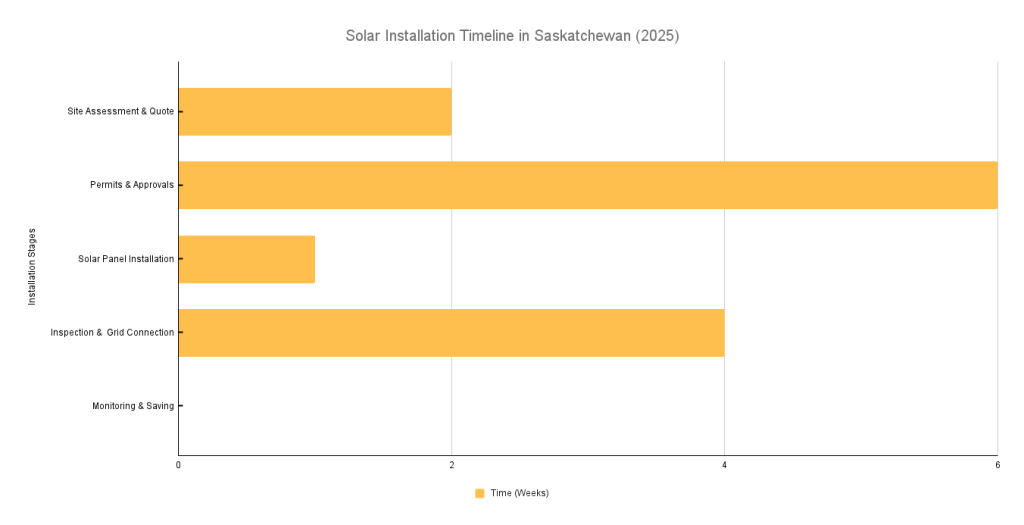
Installing solar panels is a straightforward process, however there are still multiple steps that you should consider, as well as the wait times that you should understand. Let’s consider them in more detail.
Step 1: Site Assessment & Solar Quote (1-2 Weeks)
- A professional solar installer needs to perform an audit of your roof slope and orientation.
- They should also review your energy usage and calculate the appropriate size of the solar system.
- You’ll receive a detailed quote from them.
- The quote should be itemized and should contain no hidden fees.
Pro Tip: You should always get multiple quotes and compare the pricing and system quality. Also make sure to compare online reviews.
Step 2: Permits & Approvals (2-6 Weeks)
- The installer should handle all the necessary permits in your name.
- Municipal building permits, approval from your utility company, electrical permits, etc. are all the permits that they need to handle.
- At most, this should take no more than six weeks.
Pro Tip: Some installers can process your municipal and utility company permits faster because they have more experience and know how to deal with the paperwork.
Step 3: Solar Panel Installation (1-3 Days)
- The solar panel installation.
- The installation team mounts solar panels on your rooftop.
- They add all the wiring that is necessary.
- They install an inverter.
- Optionally, they also install a solar charger and a solar battery.
- The system is tested for your safety and for the overall performance.
Pro Tip: Most residential installations take one to three days but please be aware that if anything is wrong with your roof or if there are delays in the supply chain this may be longer.
Step 4: Inspection & Grid Connection (1-4 Weeks)
- Electrical inspection takes place.
- Ensuring that the system meets local safety codes is done.
- Your utility company approves net metering, reinstalls your electricity to a bidirectional one, and your system is finally turned on.
Pro Tip: After an installation all the inspections and grid connection take between one and four weeks.
Step 5: Monitoring & Enjoying Your Solar Savings
You lean back and you browse your solar generation monitoring app to see how much money you’re saving every hour for as long as there is sunshine.
How to Get Started
Ready for a change? Contact the best Saskatchewan solar installers below:
11. Selling Excess Solar Power: Understanding Net Metering
Selling Excess Solar Power: A Guide to Net Metering
Although Saskatchewan doesn’t have any provincial solar incentives or rebates, they still have net metering. Net metering is a great program that allows you to use your local power grid as a virtual battery. At the very start, by using this system, you will be saving roughly $10,000 on the upfront costs.
On top of this, a good net metering policy that Saskatchewan has will also enable you to save month after month. You can expect to save anywhere between $50 and $300 monthly. Although it doesn’t seem much, these savings add up, especially considering a solar power system lasts some 25 years minimum.
How Net Metering Works in Saskatchewan
- The sun shines and your solar panels produce electricity.
- Electricity is converted from DC to AC.
- Your household appliances use some of that power.
- The excess power is sent into the grid.
- The grid and your bidirectional meter calculate how much electricity you’ve fed into the grid.
- This amount of electricity is credited to you for later use.
Pro Tip: You should think of net metering as a virtual solar battery. This is a huge battery that you can store all the electricity that you will be using in the following few months.
Saskatchewan Utility Buyback Rates for Excess Solar (2026)
Saskatchewan organizes net metering a bit differently than other provinces. Namely, Saskatchewan doesn’t offer you 1:1 credits when comparing the kWhs you deliver into the grid and those you pull back from the grid. When it comes to residential solar systems, if they’re up to 100 kWs in size, you will be getting 7.5 cents for every kWh you send into the grid.
This is wholesale cost credit. At the same time, every kWh you pull from the grid, you will be paying roughly 19.9 cents, so effectively you will need a very large solar panel system to reduce your electricity bill. However, by shopping smartly for your energy plan, you will be able to significantly reduce this discrepancy.
Pro Tip: Saskatchewan credits solar at 7.5¢/kWh, so plan a larger system to offset usage.
Pro Tip: Compare energy plans carefully to minimize the gap between buy and sell rates.
Who Can Benefit Most from Net Metering?
Despite the discrepancy in the cost of kWh when you use it and when you deliver it into the grid, net metering is still a great chance to save a lot of money and to make sure that you use as much of your green energy as you possibly can. Everyone should consider net metering for their solar system, especially those who are looking to reduce their carbon footprint, reduce their energy bills, and increase their power safety.
Saskatchewan's Solar Net Metering Buyback Rates (2026)
Note: the 7.5¢/kWh rate above is SaskPower’s standard net metering credit, which applies to the vast majority of Saskatchewan customers. The figures below relate to a specific utility/legacy-program scenario — confirm which applies to your property by contacting SaskPower or your installer directly.
When it comes to Saskatchewan solar net metering buyback rates, they are relatively low compared to the rest of Canada. However, if you live in Saskatchewan and belong to the Saskatchewan light and power utility area, you may get 1:1 credit at a retail rate that is available at the moment. If you are among small power producers, you can also receive roughly 11.48 cents per kWh of power delivered into the grid.
Pro Tip: SaskPower is Saskatchewan’s sole electricity utility, so there’s no retailer comparison tool needed here — contact SaskPower directly or a local installer to confirm current net metering and rebate terms.
Key Considerations
- Seasonal Rate Switching:
Saskatchewan does not allow for seasonal or day-to-day rate switching. This means that you will not be able to use some of the benefits that a system like this would enable you. However, what sets Saskatchewan apart from other provinces is that the net metering credits never expire. They get rolled over indefinitely. In most other provinces, they are nullified once per year. In Nova Scotia, that happens in December, which doesn’t really allow you to fully utilize all the extra credits you’ve produced during the year.
- Administrative Fees:
When it comes to administrative fees, there are two basic fees that you have to pay to get approved for net metering. First of all, you should pay for the interconnection study fee. The amount is $315.
At the same time, you should also be paying for the bidirectional meter and interconnection setup, which is a price starting from $498.75. Taxes are included in both fees. Please do consider that the bidirectional meter fee explained here is the minimum, so if your house is further away from the power pole, you may need to pay more for additional wiring to be run from the power pole to your home.
- Program Flexibility: There is little to no program flexibility. You can either choose to join the net metering program or not, but the seasonal variety of prices and electricity plans is simply not available in Saskatchewan.
12. Debunking Common Solar Myths and Misconceptions
Although solar has been around for decades, some myths still persist. Let’s help you debunk some of those:
Myth #1: “Solar Panels Don’t Work in Cold Climates Like Saskatchewan”
Fact: Solar panels work for as long as there is any kind of light reaching them. Direct sunlight is the best of all light sources. So, even in Saskatchewan, you will be making plenty of solar energy.
Myth #2: “Solar Power Doesn’t Work on Cloudy Days”
Fact: Solar power works on cloudy days because there is still a lot of light, but it is dispersed. So, this does not stop solar panels from generating electricity, but it does reduce their efficiency.
Myth #3: “Solar is Too Expensive”
Fact: Solar is not expensive. In fact, solar panel prices got reduced by roughly 80% in the past decade.
Myth #4: “Solar Panels Will Damage My Roof”
Fact: Solar panels do not damage your roof for as long as you hire professional installers who know what they are doing. Please always check out online reviews and do not try to save on labor costs.
Myth #5: “Solar Panels Require a Lot of Maintenance”
Fact: Solar panels require very little maintenance. An occasional brushing off or maybe hosing down of caked on dust is as much maintenance as you will be performing in the next two and a half decades.
Myth #6: “Solar Won’t Increase My Property Value”
Fact: Solar increases your property value significantly. In fact, solar-enabled homes sell faster and for higher prices.
Myth #7: Solar is Inefficient
Fact: Solar is as efficient as it can get. In fact, if we covered 50% of all the roofs in the world in solar panels, we would be producing the same amount of energy that we, as a humankind, use. So solar is very efficient.
Myth #8: Solar Panels Can’t Be Recycled
Solar panels are made of common materials that are very easy to recycle. Glass, aluminum, and silicon are all abundant and there are readily available recycling plants all around the world.
Frequently Asked Questions About Solar in Saskatchewan
How much do solar panels cost in Saskatchewan in 2026?
A residential solar system in Saskatchewan costs $13,000–$16,000 installed before incentives for a 5 kW system, $26,000–$32,000 for 10 kW, and $39,000–$48,000 for 15 kW — averaging about $2.90 per watt. With no provincial rebate currently available, net metering savings (not an upfront discount) are what bring the effective payback down to roughly 6–12 years.
Are there any solar rebates left in Saskatchewan?
No — Saskatchewan does not currently have a provincial solar rebate or grant program, and the federal Canada Greener Homes Grant stopped accepting new applications in February 2024. The main financial incentive available to Saskatchewan homeowners today is SaskPower’s net metering program, along with smaller provincial programs like the Residential Equipment Replacement Rebate and the New Home Environment Incentive for ENERGY STAR-certified upgrades.
What is SaskPower's net metering rate in 2026?
SaskPower credits residential systems up to 100 kW at 7.5¢ per kWh sent into the grid — a wholesale rather than retail rate. You pay roughly 19.9¢/kWh for power you pull from the grid, so a larger system is generally needed to meaningfully offset your bill. Unlike most provinces, Saskatchewan’s net metering credits never expire and roll over indefinitely rather than being cleared annually.
How much does it cost to set up net metering in Saskatchewan?
Two fees apply: a non-refundable $315 interconnection study, and a bi-directional meter and interconnection setup fee starting at $498.75 (more if your home is far from the power pole and needs extra wiring). Both fees include tax.
How long is the payback period for solar in Saskatchewan?
Most residential systems pay for themselves in 6 to 12 years, depending on system size and how much of your usage the system offsets. After payback, homeowners typically get 15+ years of near-free electricity given the standard 25-year panel warranty.
Does solar work well in Saskatchewan's cold climate?
Yes. Saskatchewan gets 2,400–2,700 sunshine hours annually — among the highest of any Canadian province — and monocrystalline panels, which perform especially well in cold weather, are widely recommended for the province’s climate. Cold temperatures actually improve panel efficiency compared to hot summer conditions.
What financing options are available for solar in Saskatchewan?
Homeowners can use solar-specific bank loans with lower interest rates and long payback periods, or a Home Equity Line of Credit (HELOC) if they have equity available in their home. Saskatchewan does not currently have a province-run PACE-style financing program like some other provinces.
Is a solar battery worth it in Saskatchewan?
For most homeowners, no — SaskPower’s net metering program lets the grid act as a virtual battery, which is why most Saskatchewan solar installations skip battery storage. A 10 kWh battery costs close to $10,000 and only stores about 8 hours of power, so it makes the most sense for homeowners who want backup power during outages or don’t fully trust net metering.
13. The Future of Solar Energy in Saskatchewan
Saskatchewan has high solar potential with plenty of sunny days and sunny hours every year. Low solar prices, increasing eco-consciousness, and a desire to reduce our collective carbon footprint are all the factors that help us understand what direction solar will be heading in the near future.
Key Drivers
- Ever-decreasing solar panel prices – Solar panel prices have been decreasing for the past few decades, 80% in the last decade only.
- Government incentives – Although Saskatchewan doesn’t offer solar incentives, it has a good net metering system in place. The federal incentives are still applicable to you.
- Strong solar potential – Saskatchewan has anywhere between 2,400 and 2,700 sunny hours every year, which is plenty, especially compared to the rest of Canada.
14. Not Located in Saskatchewan? Explore Other Provinces
If you’re not from Saskatchewan, or have a property elsewhere in Canada, here is more information on solar in other Canadian provinces:
- Going Solar in Alberta
- Going Solar in Manitoba
- Going Solar in British Columbia
- Going Solar in Newfoundland and Labrador
- Going Solar in Nova Scotia
- Going Solar in Ontario
- Going Solar in Prince Edward Island
- Going Solar in Quebec
- Going Solar in New Brunswick
15. Conclusion: Is Solar the Right Choice for You?
A good solar system is a great way to reduce your energy bill and your carbon footprint. This is a good solution for most Saskatchewan homeowners and for all of those who would like to move into this province. If you have a high electricity bill, own a south-facing and unshaded roof, or if you want to increase your property value, installing a solar system may be the right solution for you.
Pro Tip: Always get multiple quotes and spend a considerable time comparing them. There should be no hidden fees and you should only take into consideration companies with very verifiable experience and good online reviews.
Key Benefits of Going Solar:
- Reducing your power bill by up to 90%.
- Earning credits from excess energy generation.
- Protecting against rising energy prices.
- Gaining energy independence.
- Reducing your carbon footprint.
- Increasing your home value
Get Started Today
See the cost and savings you would have if installing solar on your house: